


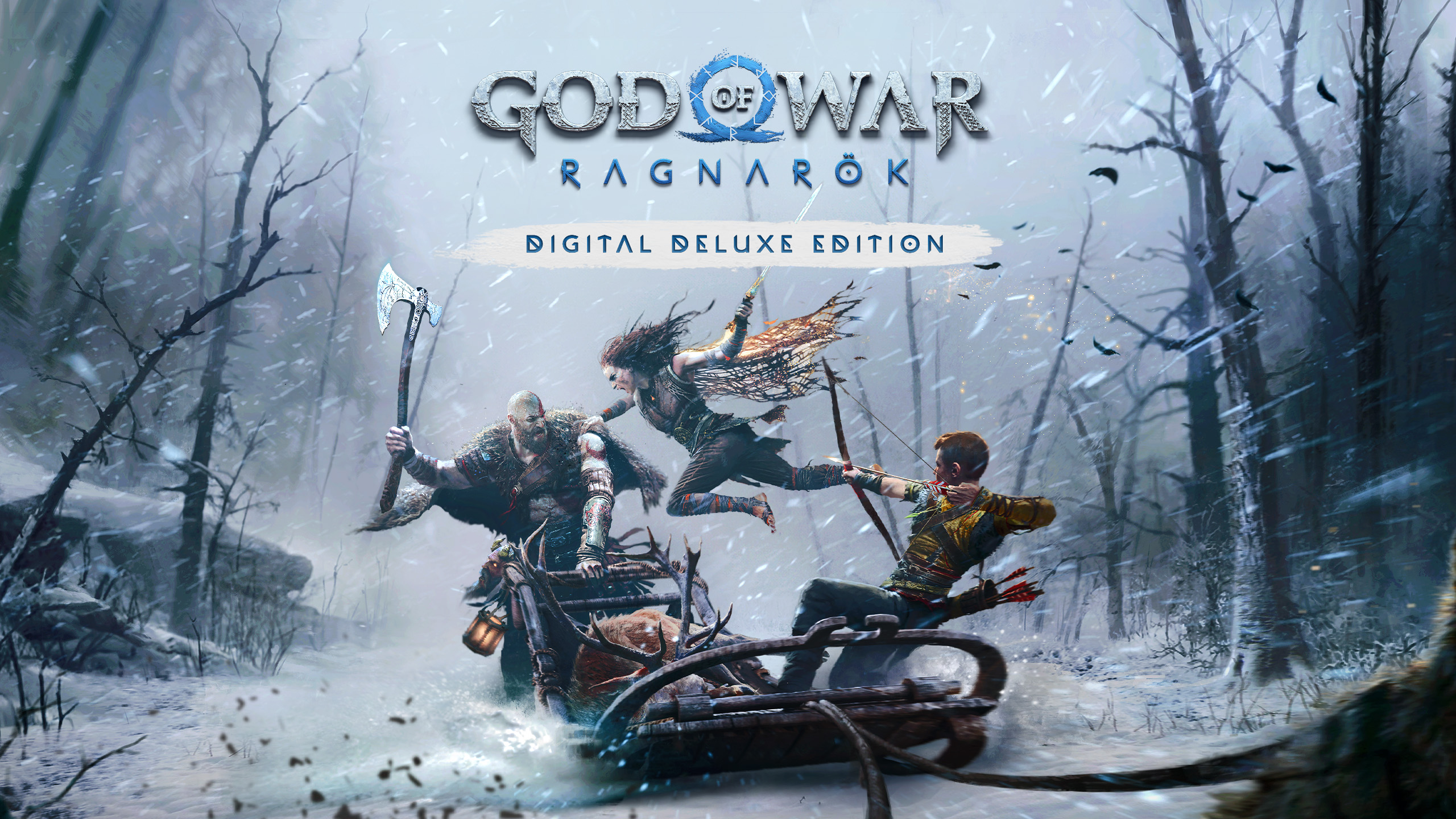
Let’s be honest - when Santa Monica Studio dropped God of War (2018), nobody was ready for what they delivered. A brutal Greek god turned soft-spoken single dad, dragging his moody son through Norse mythology while secretly carrying enough emotional baggage to fill Jötunheim. It was a masterpiece. And then God of War Ragnarök came along and somehow topped it.
We’re talking one of the most ambitious, emotionally devastating, and flat-out epic video game stories ever told. If you’ve finished it and your jaw is still on the floor, you’re in good company. If you haven’t finished it yet - first of all, what are you doing reading this? Go play it. But if you need a full breakdown, or you just want to relive the chaos, we’ve got you covered.
Strap in. This is the complete God of War Ragnarök breakdown - story recap, ending explained, and a look at what might come next.
The Setup: Fimbulwinter Has Arrived and Everyone’s Panicking
Ragnarök picks up a few years after the events of the 2018 game. Kratos and Atreus are hunkered down in their home as Fimbulwinter - the three-year winter preceding the apocalypse - rages outside. Atreus, now a teenager (and therefore somehow even more of a handful), is obsessed with uncovering the mystery of his giant name: Loki.
Meanwhile, the Aesir gods aren’t exactly thrilled that Kratos killed Baldur. Thor shows up at their doorstep swinging Mjolnir with all the subtlety of a freight train, and from there, the chase is on. Odin, the Allfather himself, is pulling strings behind the curtain - manipulating gods, giants, and mortals alike in his obsessive quest to stop Ragnarök and unlock the secrets of the mysterious realm of Asgard’s prophetic tapestries.
What follows is an absolutely sprawling journey across the Nine Realms - from the frozen peaks of Midgard to the volcanic fury of Muspelheim, the haunting beauty of Alfheim, the grimy underworld vibes of Svartalfheim, and beyond. Every realm feels alive, distinct, and packed with lore that rewards players who actually stop and listen to the dialogue instead of just smashing everything (though smashing everything is also deeply satisfying).
The Heart of the Story: Kratos, Atreus, and the Father-Son Fault Lines
If the 2018 game was about Kratos learning to be a father, Ragnarök is about what happens when that child starts becoming his own person - and those two things don’t always align.
Atreus wants to do something about Ragnarök. He believes he has a role to play as Loki, a destiny tied to the giants and the prophecy carved across the walls of Jötunheim. Kratos, haunted by his Greek past and terrified of losing another person he loves, wants to protect his son by keeping him close and keeping him out of divine affairs entirely.
It’s a conflict every parent and teenager will recognize on some level - except most parent-teen arguments don’t involve frost giants and world-ending prophecies. This tension drives the entire game and gives both characters some of their most raw, vulnerable moments. There’s a scene late in the game where Kratos tells Atreus - with his voice cracking just slightly - “I would choose you. Above all else.” It hits harder than any axe throw in the entire franchise.
The relationship between Kratos and Freya also deserves a spotlight. She starts the game as an outright enemy - and fair enough, Kratos did kill her son - but their arc together is one of the most compelling redemption storylines in recent gaming memory. Watching her grief slowly shift into something more complex and ultimately heroic is genuinely moving.
The War: Ragnarök Unleashed - and Asgard Burns
The final act of the game kicks into gear when Kratos makes a bold, borderline insane decision: take the fight directly to Asgard. The assault on Asgard is everything you’d want from a climactic battle - massive in scale, emotionally charged, and full of moments that make you pump your fist in the air or quietly whisper “oh no.”
Key highlights from the final stretch include:
- Thor’s arc reaches its conclusion - and it’s more tragic than triumphant. Thor, manipulated and beaten down by Odin for years, finally stands up… only for Odin to remind everyone why he’s the most dangerous villain in the game.
- The death of Odin - not at Kratos’ hands, but at Atreus’. Or more precisely, at the hands of Sindri, in a gut-punch moment that feels earned and devastating simultaneously.
- Surtr becomes Ragnarök - the fire giant takes his primordial form, the entity of destruction itself, and proceeds to obliterate Asgard entirely. The scale of this sequence is jaw-dropping.
- Kratos survives - and in a beautiful subversion of the prophecy that predicted his death, survival becomes the miracle rather than the default.
The Ending Explained: What Actually Happened and Why It Matters
Okay, here’s where we dig in. The ending of God of War Ragnarök is layered, emotional, and deceptively simple on the surface.
After Asgard falls and the dust settles, Atreus leaves. He tells Kratos he needs to go find the remaining giants - scattered across the realms - and fulfill his role as Loki in their story. It’s a gut-wrenching goodbye, but it’s framed as a necessary one. Atreus isn’t running away; he’s growing up. He’s stepping into his own legend, separate from his father’s shadow.
Kratos, meanwhile, is left standing in the aftermath of Ragnarök - and for the first time in either game, possibly for the first time in his entire existence, he is at peace. The final scene shows Kratos receiving something he has never had before: reverence. The surviving people of the Nine Realms look to him not as a destroyer or a weapon, but as a god worth believing in. A protector. The mural on the wall of Jötunheim - which previously seemed to show Kratos dead - is revealed to actually show him being lifted up, celebrated.
The theme is clear and beautifully executed: Kratos broke the cycle. The cycle of gods destroying themselves, of sons killing fathers, of violence perpetuating violence. He chose a different path, and it cost him almost everything - but it was worth it. The God of War became something more than war.
It’s one of gaming’s most earned emotional payoffs in years. Possibly ever.
What Comes Next? The Future of the God of War Franchise
So where does the franchise go from here? Santa Monica Studio has confirmed that the Norse saga is complete - Ragnarök was always meant to be the end of Kratos’ time in the Norse realms. But the good news? Kratos’ story is far from over.
Update, October 4, 2026: The next release is God of War Laufey, out February 16, 2027 on PS5. Kratos’ late wife Faye is the playable lead, in an afterlife of the gods called the Everywhen. A remake of the Greek trilogy is also in early development, and Christopher Judge said in September 2026 that the next Kratos game will follow Laufey. See our God of War Laufey guide.
Here’s what we know and what we’re speculating about:
A New Mythology?
The most exciting possibility is that the next God of War game takes Kratos (and possibly Atreus) into a completely new mythology. Egyptian mythology, Aztec mythology, and Slavic mythology have all been rumored and fan-theorized over the years. Each would offer an entirely fresh pantheon of gods for Kratos to square off against - and given how brilliantly Santa Monica handled Norse mythology, the sky’s the limit.
Atreus Gets His Own Game?
With Atreus heading off on his own journey, there’s a very real possibility of a spinoff or sequel focused entirely on him. His character development across both games has been tremendous, and his role as Loki in a post-Ragnarök world is rich with story potential. A game where Atreus searches for the scattered giants while carving out his own identity? Yes please.
Kratos in Egyptian Mythology
The Egyptian gods - Ra, Anubis, Set, Osiris - are some of the most visually striking and mythologically complex deities in any ancient tradition. Kratos tearing through ancient Egypt, butting heads with gods of death and the afterlife? The internet has been clamoring for this for years, and it feels like the most likely direction for the series.
Whatever comes next, one thing is certain: Santa Monica Studio has elevated video game storytelling to cinematic heights, and the God of War franchise is one of the most compelling ongoing narratives in any medium - not just gaming.
Final Thoughts: A Masterpiece That Earns Its Epic Scale
God of War Ragnarök is the rare sequel that not only lives up to its predecessor but expands on everything that made it great. The combat is deeper, the world is larger, the story is more ambitious, and the emotional beats hit harder than ever. Kratos has completed one of the most remarkable character arcs in modern storytelling - from rage-fueled instrument of divine destruction to a father, a protector, and ultimately, a god worth worshiping for the right reasons.
Atreus walks into his own story. Kratos finds peace. Asgard burns. The cycle breaks.
If that’s not the stuff of legend, we don’t know what is.
Whether you’re a longtime fan who’s been with Kratos since the original PS2 days or someone who discovered the franchise through the 2018 reboot, Ragnarök is a triumph. And wherever the series goes next - Egypt, Aztec empires, the Slavic wilderness - we’ll be there day one, Leviathan Axe in hand.
Have thoughts on the ending or theories about the next God of War game? Drop them in the comments below - we want to hear your wildest mythology predictions.
Sources for this update: Wikipedia, PlayStation Blog, Push Square, CBR.
Related on Lazybatman: God of War Trilogy Remaster Rumored to be in the Works · God of War: The Complete Story, Best Moments & Why It’s Still a Masterpiece in 2026
Discover more from Lazybatman
Subscribe to get the latest posts sent to your email.