

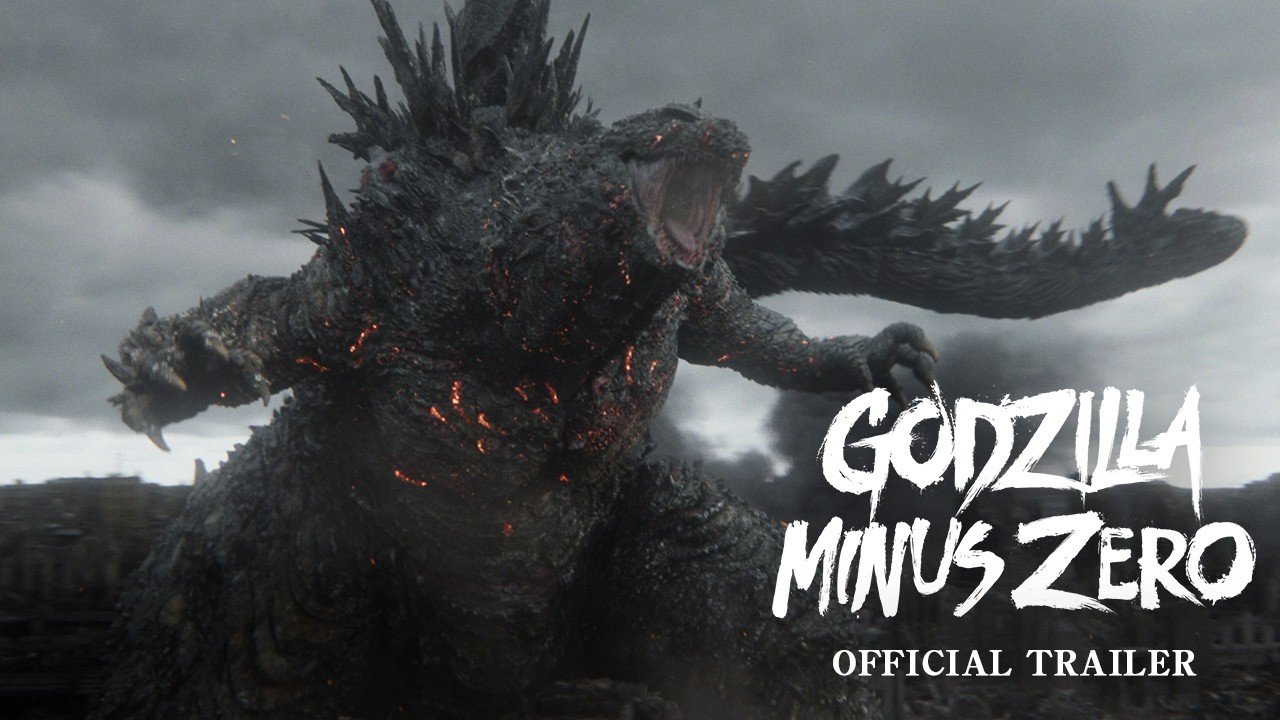
Godzilla Minus Zero is out, and once again a Godzilla movie made for a tiny fraction of a Hollywood budget looks better than most Hollywood blockbusters. Takashi Yamazaki’s sequel to the Oscar-winning Godzilla Minus One reportedly cost between $13 million and $18 million. It brings back Godzilla, adds King Ghidorah, and opened to more than $30 million in North America alone. Here is how a team of about 50 artists pulled off effects that Hollywood spends ten times more on, plus five viral X posts praising it, each with more than 10,000 likes.
No major spoilers: this covers the film’s setup, the monsters and the VFX, not the ending.
Godzilla Minus Zero at a glance
- Release date: November 3, 2026 in Japan (Godzilla Day, the anniversary of the 1954 original) and November 6, 2026 in North America through GKIDS.
- Director: Takashi Yamazaki, who also wrote it and supervised the VFX.
- VFX studio: Shirogumi, Yamazaki’s home studio in Tokyo.
- Story: Set in 1949, two years after Minus One. Ryunosuke Kamiki and Minami Hamabe return as Koichi and Noriko Shikishima, and King Ghidorah joins Godzilla.
- Reported budget: $13 million to $18 million, depending on the source.
- Reviews: 91% on Rotten Tomatoes, 74 on Metacritic, and an “A” CinemaScore from audiences.
- Format: The first Japanese production filmed for IMAX.
How much did Godzilla Minus Zero cost?
Toho never publishes official budgets, so every number here is a report. Wikipedia’s tally puts Godzilla Minus Zero at $13 million to $18 million. Yamazaki has said the budget went up about 30% from Minus One, which he said cost less than $15 million.
Now compare that with Hollywood. Godzilla x Kong: The New Empire reportedly cost $135 million. In other words, Toho made two Godzilla movies, both with Oscar-level effects, for a fraction of what one MonsterVerse film costs.
And the money came back fast. Minus Zero opened to $31.6 million in North America, the biggest opening ever there for a live-action foreign-language film, breaking a record Hero had held since 2004. It passed $70 million worldwide in its first week.
Why Godzilla Minus Zero’s VFX look so good on a small budget
This is the question every fan is asking, again. The answer is not magic. It is a set of choices Hollywood mostly does not make.
1. The director is the VFX supervisor
Yamazaki started his career in visual effects, and on both films he is the director, the writer and the VFX supervisor. On a Hollywood film, a shot can go back and forth between the director, the studio and several outside VFX companies for months. At Shirogumi, the person who decides what a shot should look like is in the same building as the people making it.
2. One in-house team, not ten vendors
Minus One was made by about 35 VFX artists and compositors. For Minus Zero, AV Club reports Shirogumi added about 15 more, so roughly 50 people. A big Marvel film can credit well over a thousand VFX artists across many companies. As No Film School points out, Hollywood sends work out to vendors who bid on it, while Toho and Shirogumi keep it inside one team. That saves a lot of money on management, contracts and fixes.
3. Shots stay flexible until late
Most big studios “lock” shots early to control costs. Yamazaki works the other way. He told AV Club he likes flexibility and will accept spending a little more to avoid locking shots too soon. His team said this approach looks strange to other VFX houses, but it is exactly why such a small team can hit this quality: they keep improving the shots that matter most instead of finishing everything to the same level.
4. Previs does double duty
On Minus Zero, the team turned Yamazaki’s storyboards into previs (rough 3D versions of each scene), and that previs then became the base for the final shots. Nothing is thrown away, so the early work is never wasted.
5. Minus One’s success paid for better tools
After the Oscar and more than $116 million worldwide for Minus One, Shirogumi spent some of that money on new rendering servers. In AV Club’s interview, Yamazaki explained that this extra computing power helped the sequel handle more complex shots.
6. Restraint: the scale serves the story
This might be the biggest secret. Yamazaki told AV Club he was very careful not to blow up the scale of the story. He also pointed out that two monsters fighting is not twice the work of one; it is four to eight times the work. So instead of non-stop destruction, Minus Zero spends its effects budget on a few huge set pieces, and lets the human story carry the rest.
The Godzilla Minus Zero VFX scenes everyone is talking about
From AV Club’s interview with the VFX team, these are the moments they are proudest of, and the ones fans keep talking about:
- King Ghidorah in Matsumoto: the team placed Ghidorah’s heads close to human eye level, so the monster feels like it is looking right at the people below.
- Ghidorah’s lightning: the effects were built from research into real high-speed footage of lightning, and the beams were hand-animated to nod to the classic Ghidorah films.
- The Nippon Theater throw: a whole building is hurled at Godzilla, complete with a sonic-boom vapour cone.
- The Ginza final battle: Yamazaki called it the hardest part of the film, because two giant monsters had to collide convincingly in every shot. The team built it cut by cut and kept tweaking the look until late in post-production.
What critics say about the VFX
Critics agree on the effects, even when they disagree on the story. Inverse calls the film a triumph of special effects. /Film gave it 7.5 out of 10 and called it a visual treat and a technical wonder, while saying it falls slightly short of Minus One. Dread Central praised the monster battles but called the story a step down, and Den of Geek felt it misses some of the haunted emotion of the first film.
Audiences are less divided: the film has an “A” CinemaScore and a 91% critics’ score on Rotten Tomatoes.
5 viral X posts praising Godzilla Minus Zero
Fans and film accounts on X have been raving about Yamazaki’s Godzilla films since the first reactions in September. We picked five posts that praise the films, the VFX or the budget, each with more than 10,000 likes.
| # | The post | Posted by | Likes |
|---|---|---|---|
| 1 | VFX that beat Hollywood blockbusters | @DiscussingFilm | 13.8K |
| 2 | $16M vs $250M | @yowtfahhh | 11.8K |
| 3 | Minus One’s Godzilla was full CGI | @xilian_x | 17.6K |
| 4 | The definition of Filmed for IMAX | @imPatrickT | 18.9K |
| 5 | One of the best sequels ever made | @14_kaiju | 19.6K |
1. “Incredible visual effects that beat almost every modern Hollywood blockbuster”
DiscussingFilm’s review post set the tone right after the film’s New York Film Festival premiere in September. Their verdict: Minus Zero surpasses all expectations, with visual effects better than almost anything Hollywood is making right now. Coming from one of the biggest film news accounts on X, that line spread fast.
2. The budget difference is “actually insane”
This fan put the numbers side by side: about $16 million for Godzilla Minus Zero against $250 million for Christopher Nolan’s The Odyssey. Neither studio has confirmed those figures, but the gap is the whole point. That is roughly fifteen Godzilla movies for the price of one Hollywood epic.
3. “Minus One’s Godzilla was full CGI and deserved that Oscar”
A throwback to the first film. This fan remembers a coworker insisting that some of Minus One‘s Godzilla had to be practical, pointing to the close-up of the sea mine in Godzilla’s mouth. According to the poster, it was all CGI. That is the best compliment a VFX team can get: people refuse to believe it was made on a computer.
4. “The definition of Filmed for IMAX”
Content creator Patrick T. caught an early IMAX screening and called Minus Zero the loudest movie they had ever heard, and an unbelievable film. The post went so far that entertainment sites picked it up as a warning about the sound. If you are watching in IMAX, that is a good thing.
5. “One of the best sequels ever made”
When the first critic reviews landed in September, kaiju fan account @14_kaiju summed up the buzz: critics were calling Minus Zero one of the best sequels ever made, with comparisons to The Godfather Part II, Terminator 2 and The Dark Knight. Some even said it beats Minus One.
Minus One set the bar: the Oscar that started it all
Godzilla Minus One (2023) won Best Visual Effects at the 96th Academy Awards in March 2024. It was the first Godzilla film ever to win an Oscar, and the first Japanese film to win in that category. Yamazaki also became only the second director to win the visual effects Oscar, after Stanley Kubrick for 2001: A Space Odyssey. That win is why Minus Zero arrived with so much pressure, and why fans are so happy it delivered.
Our take
Godzilla Minus Zero proves Minus One was not a fluke. The lesson is not “spend less”. It is “spend smart”: put the director in charge of the effects, keep the team small and close, and only go big when the story needs it. The King Ghidorah scenes alone look better than monster fights that cost ten times more.
Is it better than Minus One? On spectacle, yes. On emotion, we think Minus One still wins by a little. But a kaiju film this cheap that makes Hollywood look lazy, twice in a row, is worth celebrating.
Have you seen Godzilla Minus Zero yet? Is it better than Minus One? Tell us in the comments.
How we picked these posts
We searched X for posts about Godzilla Minus Zero and Godzilla Minus One with more than 10,000 likes, and kept five that praise the films, the VFX or the budget. We left out straight news posts such as trailer drops and box office updates. Like counts were checked on November 13, 2026 and will keep changing.
Godzilla Minus Zero FAQ
What was Godzilla Minus Zero’s budget?
Reported figures range from $13 million to $18 million. Toho has not confirmed an official number.
Who did the VFX for Godzilla Minus Zero?
Shirogumi, the Tokyo studio behind Minus One, with director Takashi Yamazaki as VFX supervisor and a team of about 50 artists.
Is Godzilla Minus Zero a sequel to Godzilla Minus One?
Yes. It is set in 1949, two years after the first film, with Ryunosuke Kamiki and Minami Hamabe returning.
Is King Ghidorah in Godzilla Minus Zero?
Yes. King Ghidorah is the new monster, and it fights Godzilla in the film’s biggest battles.
Where can I watch Godzilla Minus Zero?
In theatres, including IMAX. It opened in Japan on November 3 and in North America on November 6, 2026.
Sources
- Posts on X (like counts checked November 13, 2026): @DiscussingFilm, @yowtfahhh, @xilian_x, @imPatrickT, @14_kaiju
- VFX interview: AV Club
- Budget, release and reviews: Wikipedia, Toho Kingdom, No Film School
- Box office: The Hollywood Reporter, Screen Rant
- Reviews: Inverse, /Film, Dread Central, Den of Geek
Featured image: (c) Toho, from the official Godzilla Minus Zero trailer on the GODZILLA OFFICIAL by TOHO YouTube channel, used for editorial commentary. Godzilla and King Ghidorah are trademarks of Toho Co., Ltd.
Discover more from Lazybatman
Subscribe to get the latest posts sent to your email.